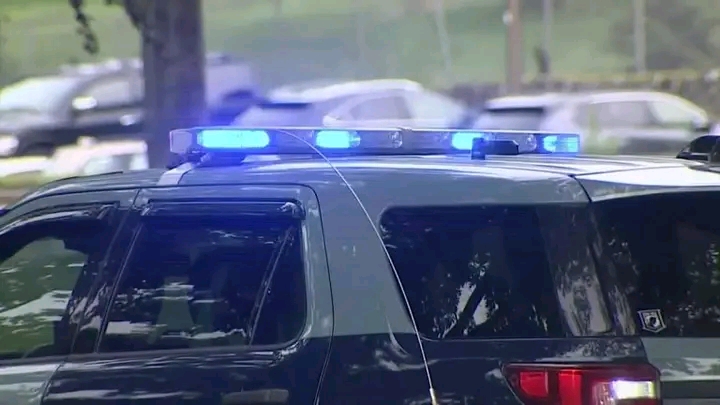
Questions After Rodney Arbuckle Suffers Fatal Nighttime Collision
Veterans Parkway, a long, fast-moving corridor through Bloomington, became the setting of a heartbreaking incident that ended the life of Rodney Arbuckle, a 57-year-old Normal resident whose unexpected presence in the roadway on a dark Wednesday night led to a collision that authorities are still working to fully understand. The crash occurred somewhere between Oakland Avenue and Lincoln Street, a stretch not designed for pedestrians and poorly illuminated at night, creating a dangerous environment for anyone on foot.
According to police, Arbuckle had been walking in the roadway itself, not on the sidewalk, shoulder, or any designated pedestrian crossing. Why he was there remains a central question in the ongoing investigation, as this part of Veterans Parkway is a high-traffic zone where drivers rarely expect to see someone on foot, especially after sunset. Officers noted that the lack of crosswalks, street lighting, and pedestrian infrastructure creates a situation where even alert drivers may have little time to react.
When the vehicle struck Arbuckle, the impact caused severe head injuries that would ultimately prove fatal. Emergency responders rushed him to OSF St. Joseph Medical Center, where medical staff fought to stabilize him. Despite their efforts, he was pronounced dead at 7:50 p.m., with the McLean County Coroner confirming that traumatic head injuries were the cause of his death.
The Bloomington Police Department quickly initiated a multi-agency investigation. The county’s Accident Reconstruction Team joined the effort, meticulously piecing together skid marks, vehicle position, lighting conditions, driver statements, and any other trace evidence that might reveal the precise sequence of events. Investigators emphasized that nighttime collisions are uniquely complex: visibility is limited, shadows distort distances, and a driver may only have seconds—or fractions of a second—to perceive and react to a pedestrian in the roadway.
Police Chief Jamal Simington addressed the community with a somber reminder: roads like Veterans Parkway were designed for vehicles, not people walking in the lane of traffic. The absence of lighting on certain stretches, especially those without intersections, significantly reduces a driver’s ability to detect hazards. He urged the public not to rush to judgment about the driver, noting that in conditions like this, even full attention and sober driving may not be enough to prevent tragedy.
Authorities are actively requesting help from the community. Witnesses, nearby businesses, homeowners with outdoor cameras, and passing motorists are encouraged to review any footage or observations from the time of the crash. Even minor details—such as the direction Arbuckle was walking or the timing of nearby traffic—could help clarify why he was in the roadway and whether anything could have altered the outcome.
As investigators continue their work, the loss of Rodney Arbuckle stands as a stark reminder of how vulnerable pedestrians are on roadways built for speed rather than safety. His death underscores the importance of visibility, infrastructure, and caution—on both sides of the windshield—especially after dark on high-speed stretches like Veterans Parkway.